
323 Services Restoration
Something Happened.
Let’s Figure Out What Happens Next.
Water damage, fire damage and severe storms don’t wait until it’s convenient. When property damage occurs, the first few decisions matter.
323 Services helps assess the construction damage, stabilize appropriate conditions, document the loss and develop a plan for restoration.
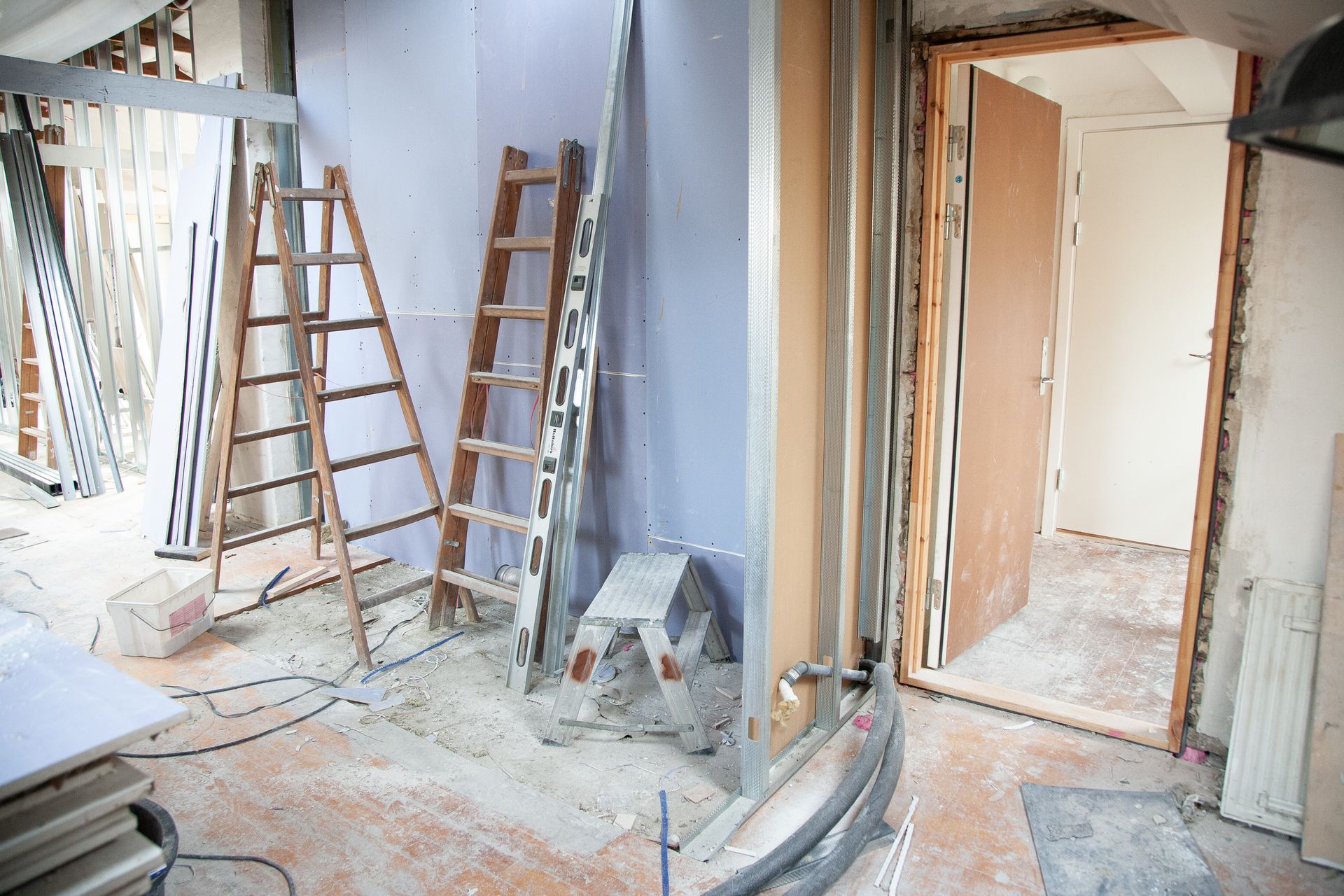
Stock photo · illustrative only
You Don’t Need a Sales Pitch Right Now. You Need a Plan.
When part of your home is wet, damaged or torn apart, everything can feel urgent. But not every decision needs to happen at once. Our approach is straightforward:
- ✓Stop additional damage when possible.
- ✓Determine what is affected.
- ✓Document the condition.
- ✓Explain what needs to happen now.
- ✓Explain what can wait.
- ✓Develop the restoration plan.
The goal is to replace uncertainty with clarity.
Water Damage Restoration
Water moves—behind drywall, underneath flooring, into cabinets. A proper response begins with determining what is actually wet.
Mitigation · moisture evaluation · structural drying · removal where necessary · documentation · reconstruction · roof and plumbing-related losses.
Fire & Smoke Damage
Storm Damage
From Damage to Done.
One of the most frustrating restoration experiences is getting through mitigation only to discover you now need another contractor to rebuild everything that was removed.
Whenever the project is appropriate for our services, 323 Services can carry the property from damage assessment and mitigation through reconstruction.
Fewer handoffs. Fewer disconnected contractors. One company responsible for how the pieces go back together.
If Something Has to Come Out, You Should Understand Why.
Removing drywall, flooring, cabinetry or other materials can be disruptive and expensive. When appropriate, we use:
- —Visual inspection
- —Moisture readings
- —Photography
- —Documentation
- —Construction evaluation
The goal isn’t unnecessary demolition. It’s removing what needs to be removed so the structure can be restored properly.
We Don’t Promise What Your Insurance Company Will Pay.
And we think that’s a good thing. A contractor should not guarantee coverage that only your insurance carrier can determine. We help with the construction side of the loss:
- ✓Inspecting damage
- ✓Documenting conditions
- ✓Preparing construction information
- ✓Developing scopes
- ✓Providing estimates
- ✓Communicating construction requirements
- ✓Performing appropriate restoration work
The Restoration Process
- 01
Call Us
Tell us what happened.
- 02
Assess
Determine immediate concerns and affected materials.
- 03
Protect
Steps intended to reduce additional damage.
- 04
Document
Photos, measurements, moisture information.
- 05
Mitigate
Drying, removal or stabilization within the agreed scope.
- 06
Plan Reconstruction
Determine what is needed to put the property back together.
- 07
Rebuild
Restore the affected areas.
- 08
Final Walkthrough
Review completed work and outstanding items.
FAQ
Questions Homeowners Ask Us
Should I call my insurance company or a restoration contractor first?+
If there is an active emergency such as fire, electrical danger, major flooding or another safety hazard, address safety first. For property damage, homeowners commonly contact both their insurer and a restoration contractor.
Can you guarantee my insurance company will cover the work?+
No. Coverage is determined by the insurance carrier under the terms of the policy. We can document property damage and provide construction information.
Do wet walls always need to be removed?+
No. The answer depends on the water source, material, extent of saturation, drying conditions and other factors. Assessment should happen before unnecessary demolition.
Do you rebuild after mitigation?+
323 Services provides reconstruction services for appropriate restoration projects, allowing many customers to continue with one construction company.
How long does drying take?+
There is no universal drying time. Materials, humidity, water volume, affected area and equipment all matter. Moisture conditions should guide drying—not an arbitrary number of days.